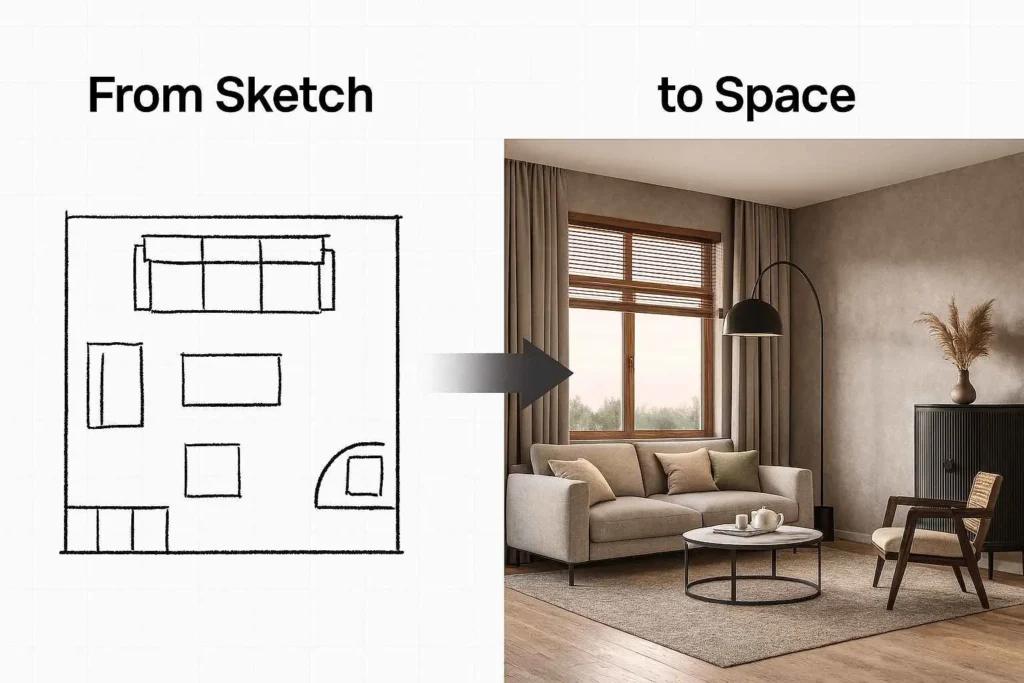
From Sketch to Space — 5 Innovative Ways to Bring 2D Designs to Life in 3D
Summary
Turning ideas into immersive, photorealistic spaces is no longer just for architects and engineers. With the rise of 3D design software, transforming a simple 2D floor plan or hand-drawn sketch into a fully realized 3D environment is easier, faster, and more intuitive than ever. Whether you’re designing a cozy living room, planning an entire home layout, or presenting a real-estate concept, these tools bridge the gap between creativity and reality.
Modern AI-powered platforms are redefining how design professionals visualize and present spaces — empowering anyone to bring their vision to life in vivid 3D detail. With automation, smart customization, and immersive rendering, 3D design is no longer just a technical task — it’s a creative experience enhanced by artificial intelligence.
1. Use AI-Powered 3D Design Tools
Traditional 3D modeling often required advanced CAD skills, complex rendering knowledge, and hours of manual work. Today, AI-powered 3D design software eliminates that barrier by turning technical workflows into intelligent automation.
Modern platforms automatically detect architectural elements from sketches or blueprints — identifying walls, windows, doors, and furniture zones — and generate accurate, photorealistic 3D environments within minutes.
AI assists by:
- Auto-scaling room dimensions to ensure proportional accuracy
- Suggesting suitable furniture layouts based on space
- Recommending décor and lighting styles that fit the design mood
This automation helps professionals produce studio-quality visuals without deep technical training. From real-estate walkthroughs to interior mockups, AI-powered 3D design tools bring speed, accuracy, and creative freedom to every project.
2. Experiment with Realistic Materials and Lighting
The true magic of 3D design software lies in its ability to replicate the real world digitally. Modern AI-driven tools go beyond basic rendering — they simulate the feeling of a space.
Designers can explore vast material libraries featuring authentic textures — from polished marble and oak wood to matte walls and soft fabrics. Advanced rendering engines use real-time lighting simulation to mimic how light interacts with surfaces, creating realistic shadows, reflections, and ambient effects.
Professionals can:
- Compare daylight and artificial lighting scenarios
- Preview how different colors and finishes affect the mood
- Experiment with brightness and contrast for visual impact
This creative flexibility not only enhances accuracy but also allows clients to make confident, visually informed decisions — reducing costly design revisions.
3. Integrate AR and VR Experiences
In today’s digital design era, visualization has evolved beyond static 3D models. Augmented Reality (AR) and Virtual Reality (VR) are changing how clients and designers experience their creations.
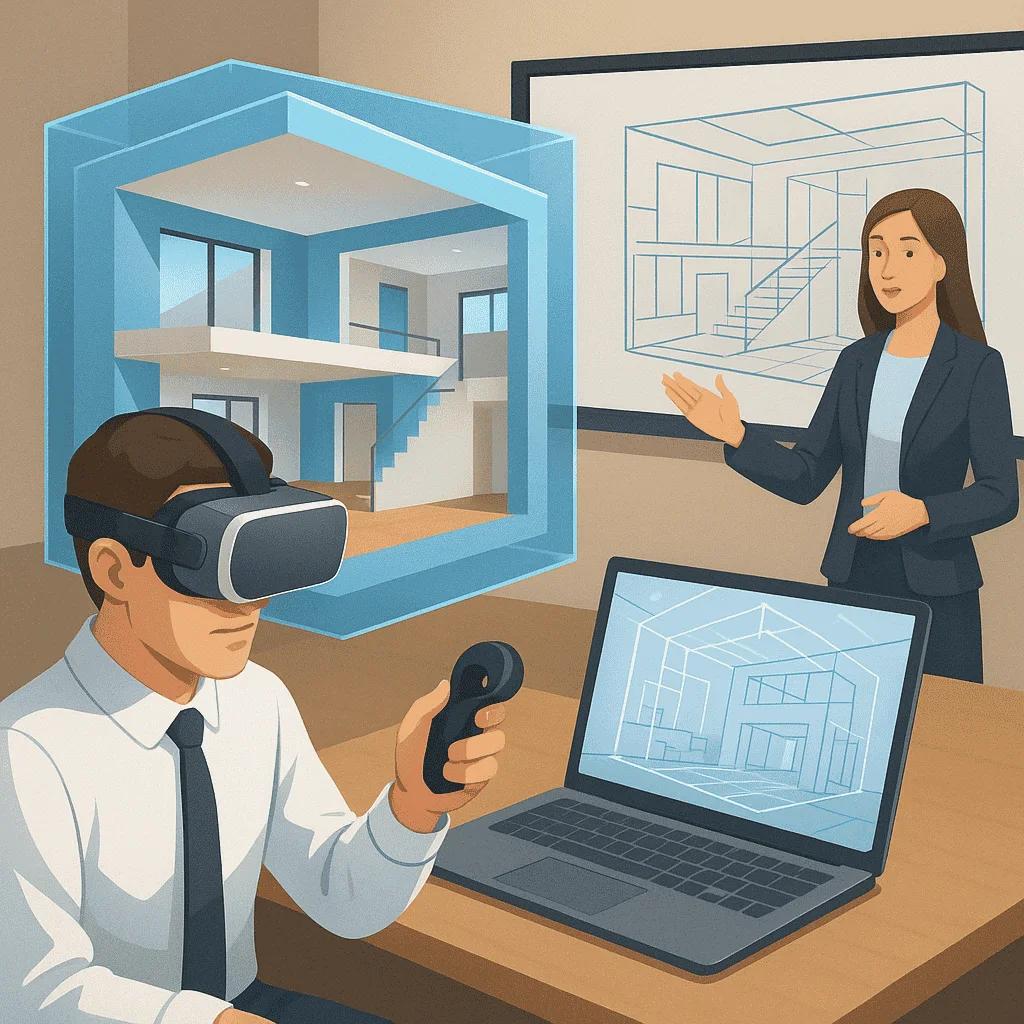
Using AR or VR, users can step into a virtual version of their design, move through rooms, and explore layouts from every perspective — long before construction begins. This immersive experience helps clients truly understand proportions, spacing, and aesthetics.
AR and VR integration also improves collaboration between design teams and clients, allowing them to review, comment, and make real-time changes within the virtual environment. It turns ordinary presentations into engaging, interactive experiences that drive faster approvals and stronger emotional connections.
4. Automate Design Customization
Personalization has become a cornerstone of modern design. With intelligent automation, 3D design software now makes it easy to tailor every detail to a client’s preferences.
AI-powered customization tools can:
- Instantly switch design themes (modern, rustic, industrial, minimalist, etc.)
- Suggest matching color schemes and décor combinations
- Reorganize layouts for better space optimization
Want to convert a minimal apartment into a luxury suite? Or visualize the same layout with different furniture and finishes? With automation, it takes seconds. This flexibility empowers designers and clients to explore multiple versions of a concept quickly — boosting creativity and efficiency.
5. Share and Collaborate Seamlessly
Design is a collaborative process involving multiple contributors — architects, interior designers, project managers, and clients. Cloud-based 3D design software enables everyone to stay connected and updated in real time.
Teams can co-edit designs, share comments directly within the 3D model, and compare different iterations through version control. Feedback loops are shorter, communication is clearer, and decisions happen faster.
By eliminating the chaos of email threads and static files, these platforms create a centralized, interactive workspace where ideas evolve efficiently and transparently.
The Future of Design Is 3D and Intelligent
The future of visualization is smarter, faster, and more immersive. As AI and 3D design software continue to evolve, systems are becoming more predictive — capable of recommending layouts, improving lighting plans, and generating design insights automatically.
Soon, 3D tools will not only visualize a space but also anticipate how it will function and feel over time. The line between imagination and reality is fading, opening the door to design workflows that are both intelligent and inspiring.
If you’re still working with 2D blueprints, it’s time to embrace the next generation of design. With AI-powered 3D tools, you can design smarter, visualize better, and present ideas that truly come to life.
Reshma Shree
A passionate content writer and digital marketer skilled in creating engaging, SEO-driven content that boosts online visibility and brand growth.