AI House Design vs Traditional Architecture: A Complete Comparison 2026
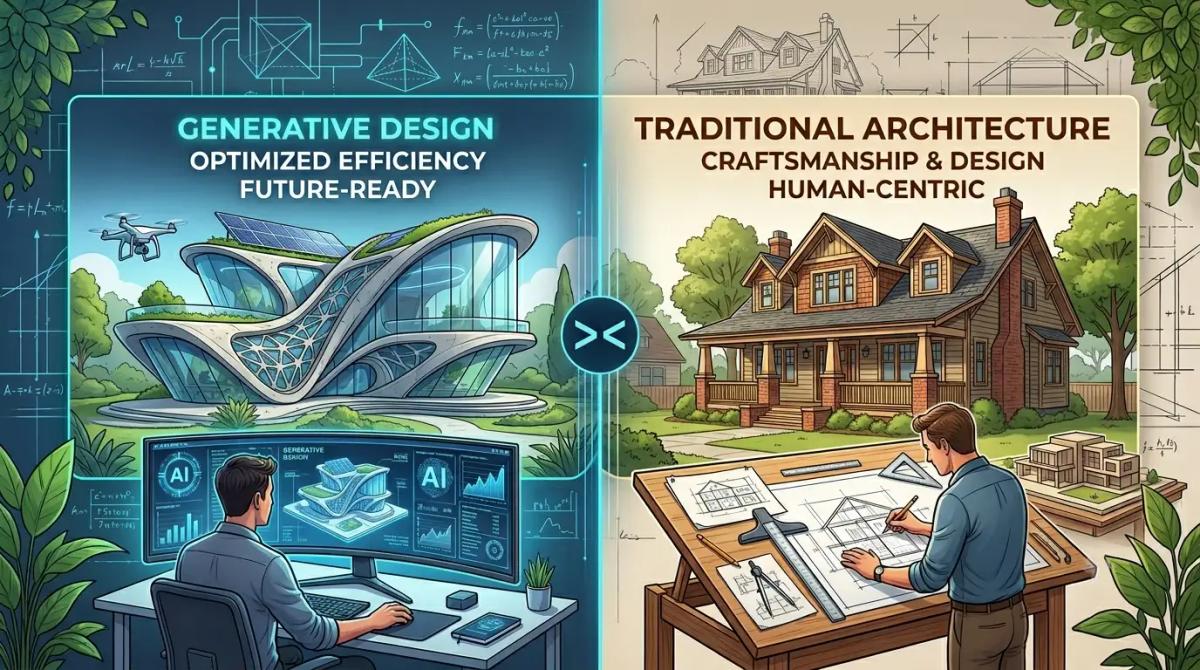
The architecture and construction industry is experiencing a significant transformation with the rise of Artificial Intelligence (AI). From generating floor plans in minutes to optimizing energy efficiency and construction costs, AI-powered house design is changing how homes are planned and built. At the same time, traditional architecture continues to offer the creativity, cultural understanding, and human-centered design that have shaped buildings for centuries.
For homeowners, builders, architects, and real estate developers, the question is no longer whether AI can assist in house design—but how it compares to traditional architectural methods. Understanding the strengths and limitations of both approaches is essential for making informed decisions.
This comprehensive comparison explores AI house design versus traditional architecture, examining their processes, advantages, challenges, costs, and future potential.
What Is AI House Design?
AI house design refers to the use of artificial intelligence, machine learning algorithms, and generative design software to create residential building plans. These systems analyze large amounts of architectural data, user preferences, environmental conditions, and building regulations to generate optimized house designs.
AI-powered design platforms can:
- Generate floor plans automatically
- Suggest room layouts
- Optimize natural lighting
- Improve energy efficiency
- Estimate construction costs
- Recommend building materials
- Create realistic 3D visualizations
By processing thousands of design possibilities in seconds, AI can help identify solutions that might take human designers days or weeks to develop.
What Is Traditional Architecture?
Traditional architecture involves human architects designing buildings based on experience, creativity, technical expertise, and client requirements. The process typically includes consultations, conceptual sketches, design development, revisions, and construction documentation.
Traditional architects consider factors such as:
- Lifestyle needs
- Cultural influences
- Aesthetic preferences
- Environmental conditions
- Structural safety
- Local building codes
- Long-term functionality
Unlike AI systems, human architects bring emotional intelligence, artistic judgment, and contextual understanding to every project.
AI House Design vs Traditional Architecture: Key Differences
1. Design Process
AI House Design
AI uses algorithms and data analysis to generate design options quickly. Users enter preferences such as:
- Plot size
- Number of bedrooms
- Budget
- Style preferences
- Climate conditions
The system then creates multiple design alternatives almost instantly.
Advantages:
- Faster design generation
- Multiple layout options
- Data-driven optimization
Traditional Architecture
Architects conduct detailed discussions with clients and develop concepts manually. The design evolves through collaboration and feedback.
Advantages:
- Personalized approach
- Creative problem-solving
- Deeper understanding of client needs
Winner: AI for speed, traditional architecture for personalization.
2. Creativity and Innovation
AI House Design
AI generates designs based on existing datasets and patterns. While it can produce innovative layouts, its creativity is derived from learned information.
Strengths:
- Generates numerous alternatives
- Explores unconventional combinations
- Identifies optimized solutions
Limitations:
- Limited emotional understanding
- Cannot fully grasp human experiences
- Dependent on training data
Traditional Architecture
Human architects combine technical knowledge with artistic creativity.
They can:
- Design unique structures
- Interpret client emotions
- Incorporate cultural identity
- Create landmark architecture
Winner: Traditional architecture.
Human creativity remains unmatched in original design thinking.
3. Speed and Efficiency
AI House Design
AI dramatically reduces design time.
Tasks completed within minutes:
- Floor planning
- Space optimization
- Material recommendations
- Energy analysis
Traditional Architecture
A traditional design process can take weeks or months depending on project complexity.
Multiple revisions often increase timelines.
Winner: AI house design.
AI significantly accelerates the design process.
4. Cost Effectiveness
AI House Design
AI can reduce design costs by automating repetitive tasks.
Potential savings include:
- Lower drafting expenses
- Reduced design iterations
- Better material utilization
- Fewer planning errors
Traditional Architecture
Professional architectural services can be costly, especially for custom homes.
However, architects often prevent expensive construction mistakes through expert oversight.
Winner: AI for initial affordability.
Traditional architecture may provide better long-term value for complex projects.
5. Customization
AI House Design
Modern AI systems allow extensive customization through user inputs.
However, customization remains constrained by available algorithms and datasets.
Traditional Architecture
Architects can adapt every aspect of a design to unique client requirements.
Examples include:
- Multi-generational living spaces
- Accessibility-focused layouts
- Heritage-inspired designs
- Site-specific architectural solutions
Winner: Traditional architecture.
Human architects offer greater flexibility and personalization.
6. Sustainability and Energy Efficiency
AI House Design
AI excels in environmental optimization.
It can analyze:
- Sun orientation
- Ventilation patterns
- Energy consumption
- Insulation requirements
- Renewable energy opportunities
AI can identify the most efficient design options quickly.
Traditional Architecture
Experienced architects also design sustainable buildings but may require additional simulations and consultants.
Winner: AI house design.
Its data-processing capabilities provide a strong advantage in sustainability optimization.
7. Accuracy and Error Reduction
AI House Design
AI minimizes human errors through automated calculations and validation checks.
Benefits include:
- Accurate measurements
- Building code verification
- Structural recommendations
- Cost forecasting
Traditional Architecture
Human oversight is valuable but may occasionally lead to calculation errors or overlooked details.
Winner: AI house design.
Automation improves consistency and precision.
8. Client Collaboration
AI House Design
Clients can instantly visualize design changes and explore multiple options.
However, interaction is largely software-based.
Traditional Architecture
Architects provide:
- Professional consultation
- Design guidance
- Emotional support during decision-making
- Problem-solving discussions
Winner: Traditional architecture.
The human relationship remains a significant advantage.
9. Adaptability to Complex Projects
AI House Design
AI performs exceptionally well for standard residential projects.
Challenges arise when:
- Sites are irregular
- Regulations are highly specific
- Historical preservation is required
- Designs involve unique engineering demands
Traditional Architecture
Architects excel at navigating complexity, ambiguity, and unusual project constraints.
Winner: Traditional architecture.
Human judgment remains crucial for complex scenarios.
10. Future Scalability
AI House Design
AI can scale rapidly across thousands of projects.
Developers can:
- Generate housing layouts
- Standardize designs
- Accelerate approvals
- Optimize large-scale developments
Traditional Architecture
Scaling requires additional human resources and project management.
Winner: AI house design.
AI offers significant advantages for large-scale implementation.
Side-by-Side Comparison Table
| Feature | AI House Design | Traditional Architecture |
|---|---|---|
| Design Speed | Excellent | Moderate |
| Creativity | Moderate | Excellent |
| Personalization | Good | Excellent |
| Cost Efficiency | High | Moderate |
| Sustainability Analysis | Excellent | Good |
| Human Interaction | Limited | Excellent |
| Scalability | Excellent | Moderate |
| Complex Problem Solving | Good | Excellent |
| Error Reduction | Excellent | Good |
| Cultural Understanding | Limited | Excellent |
Benefits of AI House Design
Faster Project Delivery
AI can reduce conceptual design time from weeks to hours.
Lower Design Costs
Automation reduces labor-intensive drafting work.
Data-Driven Decisions
Design recommendations are based on measurable performance metrics.
Improved Sustainability
AI identifies environmentally responsible solutions more efficiently.
Better Space Optimization
Algorithms can maximize usable square footage while maintaining functionality.
Benefits of Traditional Architecture
Human-Centered Design
Architects understand emotional and lifestyle considerations.
Unique Architectural Identity
Every project can reflect the owner’s personality and vision.
Contextual Understanding
Architects consider cultural, historical, and environmental factors.
Expert Judgment
Human expertise helps navigate unexpected challenges.
Strong Client Relationships
Collaboration often results in more satisfying outcomes.
Challenges of AI House Design
Despite its advantages, AI still faces limitations:
- Limited emotional intelligence
- Potential design uniformity
- Dependence on data quality
- Difficulty handling highly unique projects
- Regulatory compliance variations across regions
AI is a powerful tool, but it does not completely replace professional architectural expertise.
Challenges of Traditional Architecture
Traditional methods also have drawbacks:
- Longer design timelines
- Higher costs
- Limited scalability
- Human error risks
- Time-consuming revisions
These challenges have encouraged many firms to adopt AI-assisted workflows.
The Future: AI and Architects Working Together
Rather than replacing architects, AI is increasingly becoming a collaborative partner.
The most effective future model combines:
AI for:
- Data analysis
- Floor plan generation
- Cost estimation
- Sustainability optimization
- Design automation
Architects for:
- Creative vision
- Client communication
- Cultural interpretation
- Complex problem-solving
- Final design decisions
This hybrid approach delivers both efficiency and human creativity.
Which Is Better: AI House Design or Traditional Architecture?
The answer depends on project goals.
Choose AI House Design if you need:
- Fast design generation
- Budget-friendly planning
- Multiple layout options
- Sustainability optimization
- Large-scale residential development
Choose Traditional Architecture if you need:
- Unique custom homes
- Complex site solutions
- Strong creative input
- Cultural or heritage-sensitive design
- Personalized client collaboration
For many modern projects, the best solution is not choosing one over the other but integrating both.
AI house design and traditional architecture each offer distinct advantages. AI brings unprecedented speed, efficiency, accuracy, and optimization, making it a valuable tool for modern residential design. Traditional architecture continues to excel in creativity, personalization, cultural sensitivity, and human-centered problem-solving.
As technology advances, the architectural industry is moving toward a hybrid future where AI handles data-intensive tasks while architects focus on innovation and client experience. This combination promises smarter, more sustainable, and more personalized homes than ever before.
Design Your Dream Home with AI-Powered Precision
Why spend weeks coordinating architects, interior designers, estimators, and visualization experts when one intelligent platform can streamline the entire process?
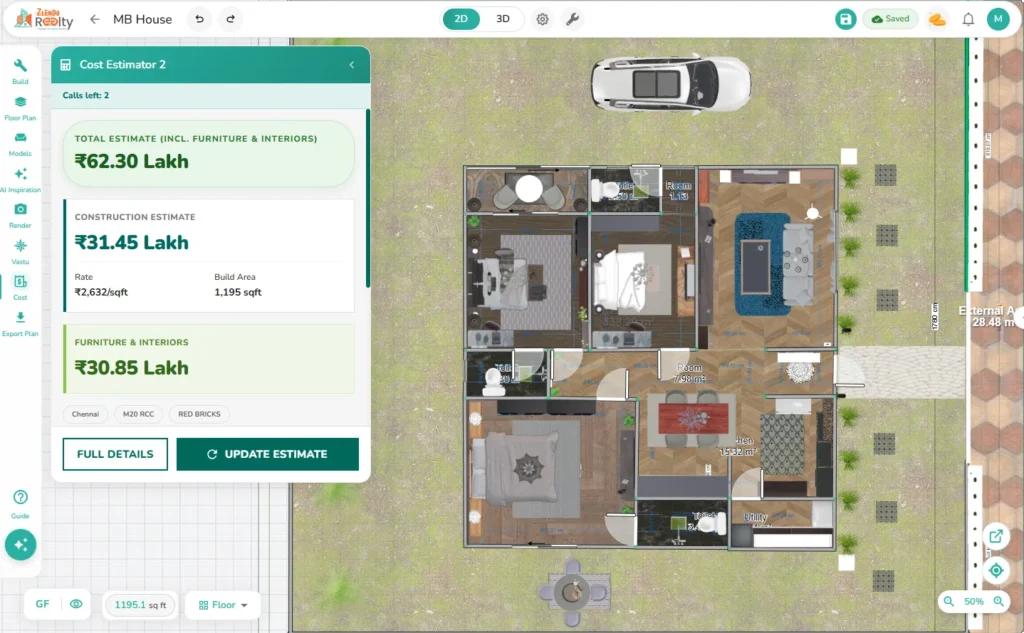
At Zlendo Realty, we combine the power of AI with real-world design expertise to help homeowners, builders, and developers create smarter, faster, and more cost-effective residential and commercial spaces.
Transform Your Vision into Reality with Zlendo Realty’s AI Design Suite
Why Choose Zlendo Realty?
Whether you’re planning a custom home, renovating an existing property, designing a commercial office, or developing a large-scale real estate project, Zlendo Realty helps you:
- Reduce design time from weeks to days
- Visualize concepts before construction
- Optimize layouts and space utilization
- Improve budget planning and cost control
- Create stunning interiors and exteriors
- Ensure Vastu-compliant designs
- Experience immersive 3D walkthroughs
- Make data-driven design decisions
Ready to Build Smarter?
The future of architecture is not AI versus architects—it’s AI empowering better design decisions. With Zlendo Realty’s advanced AI-powered design ecosystem, you can plan, visualize, optimize, and transform your dream home or office from concept to reality with unprecedented speed and accuracy.
Reshma Shree
A passionate content writer and digital marketer skilled in creating engaging, SEO-driven content that boosts online visibility and brand growth.